
The Difference Between Burnout and Persistent Sadness (And Why It Matters)
If you’ve ever thought, “Am I just burnt out or is this something deeper?” you’re not alone. A lot of students and young adults are dragging themselves through the day, unsure if they’re just tired from doing too much—or if their brain and emotions are waving a bigger red flag.
College surveys have found that over 60% of students meet criteria for at least one emotional challenge in a given year (American Psychiatric Association, 2023). That’s… a lot of people feeling overwhelmed, exhausted, or low. So if you’re confused about what you’re feeling, it makes sense.
This guide will help you tell the difference between burnout and persistent sadness, understand where they overlap, and figure out what kind of support might actually help.
Key Takeaways:
✓ Burnout is usually tied to chronic stress in specific roles (school, work, caregiving), while persistent sadness spreads into many areas of life and sticks around even when you “rest”
✓ Burnout often shows up first as exhaustion and cynicism about tasks, while persistent sadness hits motivation, pleasure, and self-worth more globally
✓ You can absolutely have both at the same time—especially if you’re dealing with ongoing stress, anxiety, or ADHD in college or early career
✓ Knowing which one is louder right now helps you choose better tools: boundary-setting and workload changes for burnout; mood, sleep, and connection support for persistent sadness
✓ You don’t have to perfectly label it to deserve help—if things feel heavy most days, that’s enough reason to start tending to yourself and reaching for support
1. Why this confusion is so common
You’re juggling classes or work, maybe loans, maybe family pressure, maybe ADHD or anxiety on top of all that. You’re tired all the time. You feel numb or snappy. You can’t tell if you just need a break—or if something is really wrong.
A few reasons this gets messy:
- Hustle culture praises burnout as “grind mode”
- Persistent sadness is often minimized as “just stress”
- Social media makes everyone else look “fine”
- Many people don’t have language for what they’re feeling
On top of that, a lot of young adults are already dealing with emotional struggles. In 2023, about 33.8% of U.S. young adults aged 18–25 had some kind of emotional or behavioural condition in the past year, the highest rate of any adult age group (SAMHSA, 2024). So burnout and low mood are landing on brains that are already overloaded.
You’re not dramatic for wondering what’s going on. You’re trying to understand your own warning signs—and that’s actually a really healthy move.
Burnout vs persistent sadness in one glance
Here’s a quick comparison to ground us before we go deeper:
| Feature | Burnout | Persistent sadness |
|---|---|---|
| Main cause | Long-term stress, overload, no recovery | Shifts in mood, energy, thinking, pleasure |
| Tied to | Specific roles (school, job, caregiving) | Most areas of life |
| Core feeling | Exhausted, detached, “I can’t do this” | Empty, hopeless, “Nothing will get better” |
| Mood | Irritable, cynical, numb about tasks | Sad, flat, guilty, low self-worth |
| Energy pattern | Drained by tasks, slightly better on break | Low even with rest, mornings can feel heavy |
| Fix temptation | “I just need a vacation” | “I just need to force myself to be normal” |
You don’t need to fit perfectly into one column. These are patterns, not boxes.
2. What burnout actually feels like
Burnout isn’t just “being busy.” It’s what happens when you’re under chronic stress without enough recovery time, and your brain basically starts pulling the fire alarm.
Core signs of burnout
Most burnout definitions include three big pieces:
- Emotional exhaustion – you feel drained, like you have nothing left to give
- Cynicism or detachment – you start to care less about things you used to care about, or feel numb and sarcastic about them
- Reduced sense of effectiveness – you feel like you’re failing, or nothing you do makes a difference
In real life, that might look like:
- Staring at your laptop for an hour and doing nothing
- Feeling annoyed by friends, classmates, or customers for no clear reason
- Doing the bare minimum on assignments when you used to try
- Scrolling for hours because your brain refuses to start work
- Feeling weirdly angry at your calendar or email
Example:
You open your course portal, see five upcoming deadlines, and your brain just… shuts down. You’re not exactly sad, you’re more like “I hate everything and I’m done.” You close the tab and binge-watch a show you don’t even like.
That shutdown is a burnout response. Your system is overloaded and trying to protect you by hitting the brakes.
Why students and Gen Z burn out so fast
Burnout hits young people hard because the load is high and the support is often low:
- Constant academic pressure (grades, internships, “build your resume”)
- Financial stress and student debt (we break this down more in our student debt + wellbeing guide)
- Social media comparison and “always on” culture
- ADHD and anxiety making basic tasks take 3x the energy
- Jobs or caregiving on top of school to survive
Globally, low mood, anxiety and behavioural challenges are already among the leading causes of difficulty in adolescents (WHO, 2025). Add burnout on top of that, and of course you’re exhausted.
How burnout responds to rest
One key clue: burnout often eases a bit when you’re truly away from the stress source.
- A weekend with no school/work might bring a tiny lift
- A break from a toxic boss or professor might make you feel more like yourself
- Summer break or a lighter semester might reduce the constant dread
If you notice, “When I’m away from school/work, I actually feel kind of okay,” burnout is probably a big part of the picture.
3. What persistent sadness feels like
Persistent sadness is more than a couple of bad days. It’s that long, heavy stretch where feeling down becomes your default setting.
In recent national data, about 40% of high school students reported persistent feelings of sadness or hopelessness in the past year (CDC, 2024). That pattern often continues into college and early adulthood. So again—if this sounds like you, you’re far from alone.
Core signs of persistent sadness
People experience it differently, but common themes include:
- Low mood most days – feeling sad, empty, or “meh” for weeks
- Loss of interest – things you used to enjoy now feel pointless
- Changes in sleep – too much, too little, or restless
- Changes in appetite – eating way more or way less
- Low energy – everything feels like moving through mud
- Guilt and self-criticism – “I’m a failure,” “I’m a burden”
- Difficulty concentrating – your brain feels foggy or scattered
Teen and young adult low mood often shows up as persistent sadness or irritability plus loss of interest in activities, changes in sleep and appetite, and low energy (APA/Mayo Clinic, 2022). Irritability and anger can actually be more prominent than tearfulness (AAKOMA Project, 2024).
Example:
Your friends invite you out, and you say no—not because you’re too busy, but because you can’t imagine feeling anything but tired and off. You stay home, scroll, feel worse, and then beat yourself up for “being boring.”
That “I don’t even want to try” feeling is often a sign of persistent sadness, especially when it lasts for weeks.
How persistent sadness interacts with rest
Here’s a big difference from burnout: with persistent sadness, rest alone usually doesn’t fix much.
- You can sleep in and still wake up heavy
- Breaks from school/work don’t bring back your excitement
- Even fun plans feel like chores
During 2021–2023, about 13.1% of people aged 12 and over reported low mood symptoms in the past two weeks, with adolescents among the most affected (CDC, 2024). For many, it’s not about workload—it’s about how their brain and body are processing everything.
If you notice, “Even when I’m not doing anything, I still feel low, empty, or hopeless,” persistent sadness may be a big piece of what’s going on.
4. Where burnout and persistent sadness overlap
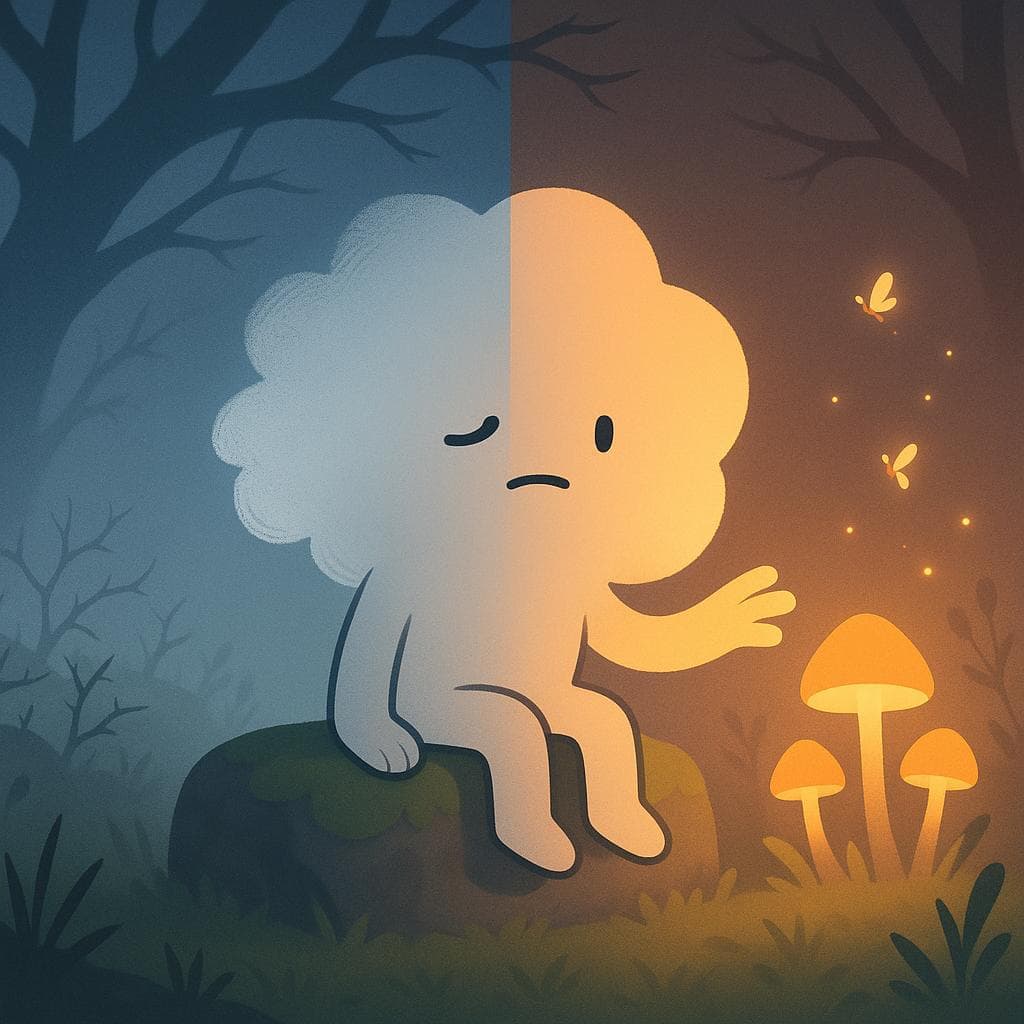
This is where it gets tricky: you can be burnt out and also experiencing persistent sadness. In fact, burnout can sometimes trigger or worsen low mood, especially if it drags on for months.
Shared symptoms
Both burnout and persistent sadness can involve:
- Exhaustion and low energy
- Trouble concentrating
- Feeling detached from people or activities
- Sleep changes
- Feeling like you’re failing or “not enough”
So if you’re like, “Cool, so it’s both,” you might be right.
ADHD, anxiety, and the mix
If you have ADHD or anxiety, it’s even more tangled:
- ADHD makes everyday tasks more draining → more burnout risk
- Anxiety keeps your nervous system on high alert → harder to rest
- Burnout from constantly pushing → more vulnerable to persistent sadness
- Persistent sadness → less motivation → more last-minute panic and burnout
Untreated anxiety in Gen Z is linked to academic decline and sleep disturbance (Parents Magazine, 2025). Add burnout and low mood, and of course everything feels harder.
5. How to tell which one is louder right now
You don’t need a perfect diagnosis to help yourself, but a rough sense of “Is this more burnout or more persistent sadness?” can guide your next steps.
Quick self-check questions
Ask yourself:
-
If my current school/work load magically disappeared for one month, how do I imagine I’d feel?
- “Honestly, I think I’d feel a lot better, just tired at first.” → Burnout might be louder.
- “I think I’d still feel empty and unmotivated, just with less pressure.” → Persistent sadness might be louder.
-
Where do I feel it most?
- Mainly when thinking about school, work, or specific responsibilities → Burnout leaning
- In almost every area (school, friends, hobbies, alone time) → Persistent sadness leaning
-
What’s my inner voice like?
- “I can’t keep doing this,” “I’m so tired,” “I need a break” → Burnout voice
- “Nothing will change,” “I’m worthless,” “What’s the point” → Persistent sadness voice
-
Does real rest help, even a little?
- A day fully off brings some relief → Burnout
- Days off don’t touch the heaviness → Persistent sadness
Again, you might see both. That’s okay. The goal is not to stick a label on yourself; it’s to understand what kind of care you need.
6. What actually helps burnout
If burnout is a big part of what you’re feeling, your main job isn’t to “push through.” It’s to reduce the load and increase recovery—especially if you have ADHD or anxiety and your brain already works harder to do basic tasks.
Step 1: Name your limits
You’re allowed to have limits. Your brain and body already have them—you’re just deciding to respect them.
Try writing down:
- How many hours of focused work you can realistically do in a day
- How many social events per week you can handle without crashing
- How much sleep you need to feel semi-human
Even if life doesn’t fully match these numbers yet, knowing them helps you say no more confidently.
Step 2: Cut or soften one demand
You might not be able to quit your job or drop out of school, but you can usually adjust one thing.
Examples:
- Ask a professor for an extension instead of silently drowning
- Switch one perfectionist assignment to “good enough” mode
- Reduce one shift at work if you can afford it
- Turn a group hang into a low-key movie night instead of a big outing
We talk more about this kind of boundary work in setting boundaries without feeling like an asshole.
Step 3: Build tiny recovery pockets
Burnout hates all-or-nothing thinking like “I need a two-week vacation or nothing matters.” Start with 2–5 minute recovery pockets.
Some ideas:
- Lie on the floor and stare at the ceiling for 3 minutes
- Put your phone down and look out a window while you breathe slowly
- Do a 30–60 second stretch between tasks
- Take a 5-minute walk around your building or down the hall
Even micro-breaks give your nervous system tiny sips of rest.
7. What actually helps persistent sadness
When persistent sadness is louder, you still want rest—but you also need things that gently nudge your brain’s reward and connection systems.
Step 1: Shift from “fixing” to “tending”
You’re not going to logic your way out of persistent sadness in one big breakthrough. Think of it like a plant that’s wilted from lack of water and sun. You don’t scream at it to stand up—you give it small, consistent care.
A helpful mindset:
- “I’m not trying to be 100% better.”
- “I’m aiming for 1% less heavy today.”
Step 2: Try behavioural activation (tiny version)
Behavioural activation is a CBT skill where you gently schedule small, meaningful activities to create chances for your brain to feel even a tiny bit better. Research shows this helps reduce low mood in young people by increasing positive reinforcement (APA, 2023).
Start with one thing per day that is:
- Short (5–15 minutes)
- Low effort
- Slightly more rewarding than scrolling
Ideas:
- Sit in a sunny spot with a drink
- Text one person “thinking of you”
- Draw, knit, or doodle for 10 minutes
- Step outside and feel the air for 2 minutes
You don’t have to enjoy it right away. Just doing it is the “watering.”
Step 3: Support your sleep, gently
Sleep and mood are tightly linked. Teens and young adults who are satisfied with their sleep have way fewer low mood symptoms than those who aren’t (National Sleep Foundation, 2024).
You don’t need a perfect sleep routine. Try one tiny shift:
- Set a “wind-down” alarm 30–45 minutes before bed
- Dim your screen or switch to audio (podcast, music) for the last 15–20 minutes
- Keep your wake-up time roughly consistent, even on weekends
We go deeper into this in sleep and emotional wellbeing: why you can’t just power through.
Step 4: Let someone in a little
Persistent sadness loves isolation. It tells you you’re a burden, then uses that to keep you alone.
Try low-pressure connection:
- Send a friend a meme with “this is my vibe today”
- Tell someone, “My mood’s been off lately, can we just hang without talking about it?”
- If you have access, mention your low mood to a doctor, counselor, or campus therapist
About 20% of adolescents report receiving therapy or counseling in a given year (CDC, 2025)—seeking support is way more common than it might feel in your head.
8. Tiny steps you can take today
When you’re burnt out, sad, or both, even reading this far is work. So here are small, concrete steps you can try in under five minutes.
-
Name today’s main flavor
- Say out loud or type in your notes: “Today feels more like burnout / more like persistent sadness / a mix.”
- No judgment—just data.
-
Check one body need
- Ask: Have I eaten something, had water, or moved at all in the last few hours?
- Pick one: a sip of water, a snack, or a 30-second stretch.
-
Change your environment by 1%
- Open a window or curtain a crack
- Clear one item from your desk or bed
- Turn on a softer or warmer light
-
Send one honest message
- “Hey, my brain’s been weird lately. Just wanted to say hi.”
- Or: “I might be slow replying; I’m pretty drained this week.”
-
Pick tomorrow’s tiny kindness
- Lay out comfy clothes
- Put a glass of water by your bed
- Add one 10-minute “nice thing” block to your calendar
These won’t solve everything. Nothing instant will. But they are you, right now, tending to yourself in the smallest real ways—and that matters.
9. Conclusion
Burnout and persistent sadness can look similar from the outside: tired, checked out, “not yourself.” But inside, they come from slightly different places—and they need slightly different kinds of care.
- Burnout is your system saying, “This load is unsustainable.”
- Persistent sadness is your system saying, “Everything feels heavy, even when I’m not doing much.”
You’re allowed to listen to both.
You don’t have to wait until you have the perfect label to deserve rest, support, or tools that help you track tiny wins. One simple next step: choose one small action from this article and do it in the next 10 minutes. That’s it. That’s tending.
If you want a gentle place to keep track of those tiny actions and see them grow over time, you can download Melo and let your little wellness garden reflect the progress your brain tends to forget.
Note: This article is for general information and support. It’s not a diagnosis or a replacement for professional care. If your low mood, exhaustion, or difficult feelings are making it hard to function most days, consider reaching out to a therapist, counselor, or healthcare provider to explore more personalized support.