
Stress Management Tools That Actually Work for Students
If you’re a student, “stressed” probably feels less like a mood and more like your default setting. Classes, group projects, money, family expectations, job searches, social stuff—it’s a lot. And if you’re also dealing with anxiety, ADHD, or low mood, even “basic” tasks can feel like boss-level challenges.
You’ve probably heard a million vague tips: “just breathe”, “time manage better”, “touch grass”. Cool. But what actually helps when your heart is racing before an exam, your brain won’t focus on readings, or you’re doomscrolling instead of sleeping?
This guide is about stress management tools that actually work for students—especially if your brain is tired, overwhelmed, and a little spicy.
Key Takeaways:
✓ Stress isn’t just “in your head”—it’s your nervous system trying to protect you, which is why willpower alone doesn’t fix it
✓ The best stress management tools for students are tiny, repeatable actions: 1–5 minute habits you can plug into your real schedule
✓ Simple body-based tools (breathing, movement, sensory resets) calm anxiety faster than overthinking the problem
✓ External supports—planners, wellness apps, study structures, and people—do the heavy lifting when your brain is exhausted
✓ You don’t need therapy-level money to get support; there are realistic therapy alternatives, campus resources, and free tools that help you cope

1. Why student stress feels so intense
Your brain is not broken
If you feel like everyone else is “handling it” while you’re barely hanging on, you’re not alone—and you’re not failing.
College and early adulthood are literally a high-risk window for emotional struggles. Data show that many serious emotional challenges first show up in the late teens and early 20s, making this a critical time for support (American Psychiatric Association, 2024). College surveys have found that over 60% of students meet criteria for at least one emotional health problem in a given year (American Psychiatric Association, 2023).
So if you’re overwhelmed, your experience is actually very normal for this stage of life. The system is heavy; you’re not weak.
What stress is really doing
When you’re stressed, your body shifts into survival mode:
- Heart rate up
- Muscles tense
- Thoughts speed up or completely freeze
- Focus disappears or locks onto the “threat” (exam, email, grade, text)
For students with anxiety or ADHD, this can hit even harder. Your nervous system is already more sensitive to deadlines, uncertainty, and social pressure. Add in sleep debt, caffeine, and constant notifications, and your stress response is basically on “always-on” mode.
Why generic advice doesn’t land
You’ve probably heard:
- “Just manage your time better.”
- “Just don’t procrastinate.”
- “Just meditate for 30 minutes every morning.”
If your brain is already overloaded, these feel impossible. You don’t need more rules—you need tools that:
- Take very little energy to start
- Fit into weird student schedules
- Work even when you’re anxious, tired, or low on motivation
That’s what the rest of this guide is for.
2. Fast-acting tools for anxiety spikes
When your stress is peaking—before a presentation, during an exam, or after a scary email—you need tools that work right now, not in 3 months.
Breathing that actually helps
“Just breathe” is annoying advice unless you know how.
Try this 1-minute pattern that’s used in a lot of anxiety programs:
The 4–6 breath
- Inhale through your nose for 4 seconds.
- Exhale slowly through your mouth for 6 seconds (like you’re blowing through a straw).
- Repeat 5–8 times.
Why it helps: Longer exhales tell your nervous system it’s safe enough to chill a bit. It’s simple enough to do in class, on the bus, or in the bathroom before a presentation.
Example:
You’re waiting for your name to be called in a seminar. Your chest feels tight and your hands are shaky. You put your phone down, stare at one spot on the wall, and do 6 slow 4–6 breaths. You still feel nervous—but you’re no longer on the edge of panic.
Grounding with your senses
When your thoughts are spiraling, pulling your attention back to your body can dial things down.
Try the 5–4–3–2–1 method:
- 5 things you can see
- 4 things you can feel (clothes, chair, floor)
- 3 things you can hear
- 2 things you can smell
- 1 thing you can taste (or just take a sip of water)
You can do this silently in a lecture hall, at your desk, or lying in bed when your brain is replaying that one awkward moment from 3 years ago.
Micro-movement resets
Research shows that movement can reduce anxiety and low mood in young people (Singh et al., 2025; Li et al., 2023). That doesn’t mean you need to become a gym person. Tiny bursts count.
Try:
- Stand up and march in place for 30 seconds
- Shake out your hands and arms like you’re drying them
- Roll your shoulders and neck slowly 5–10 times
- Walk one loop around your building or down the hallway
Think of it as shaking the stress out of your body, like a dog after a bath.
3. Everyday tools to keep stress lower
Big stress spikes are rough, but constant low-level stress can be just as draining. These tools help keep your baseline a little calmer.
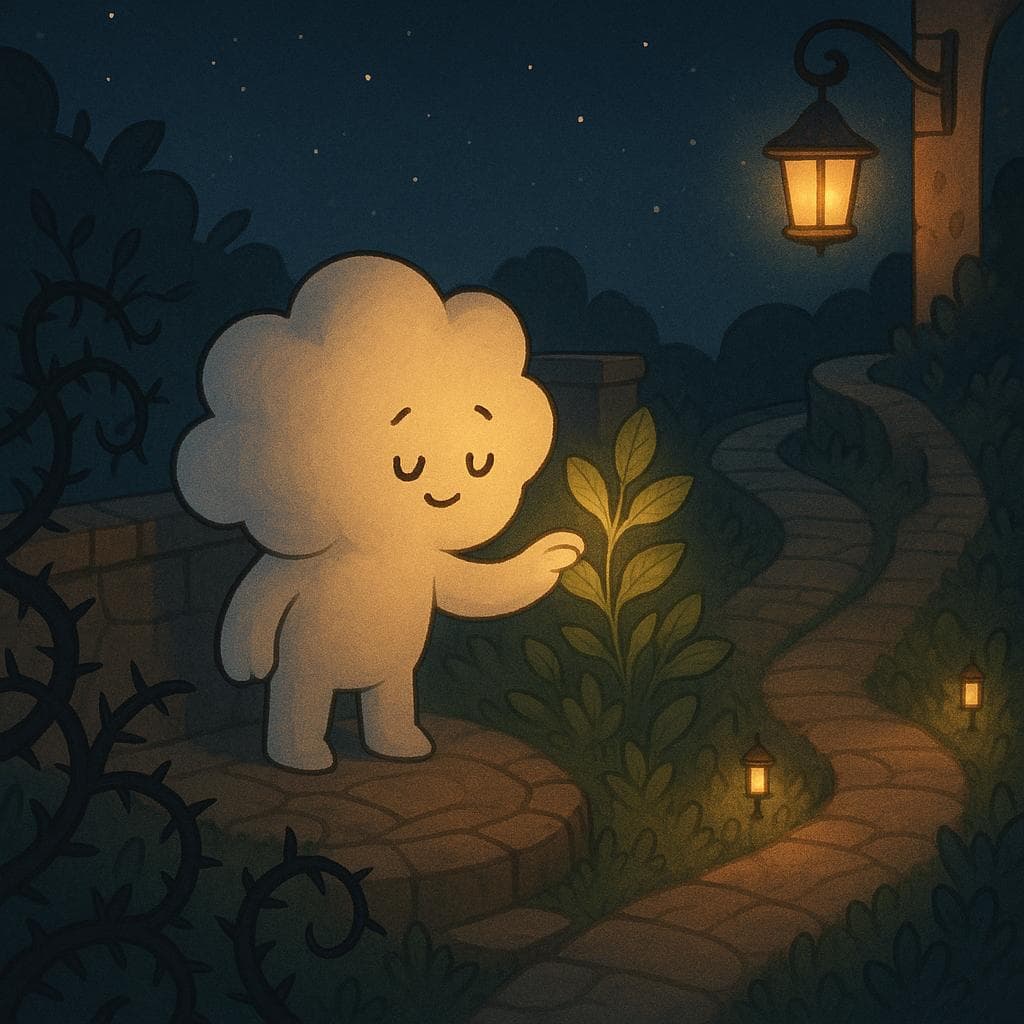
Sleep that doesn’t wreck you
Sleep and mood are tightly connected. Teens and young adults who get better sleep have fewer mood swings and less emotional reactivity (National Sleep Foundation, 2024). But student life plus ADHD/anxiety can make sleep chaos.
Instead of aiming for “perfect sleep hygiene”, try one small shift:
- Set a “start winding down” alarm 45–60 minutes before you want to sleep
- Move your phone charger across the room, not next to your pillow
- Switch from TikTok to a podcast or audiobook in bed
- Use a simple “3 things I did today” note to close out your day
If you want to go deeper on this, check out our guide on sleep and emotional wellbeing.
Tiny movement habits
Exercise can meaningfully improve anxiety and low mood in young people, especially when it happens regularly (Li et al., 2023; Singh et al., 2025). But “go to the gym 5x a week” is not the vibe when you’re buried in assignments.
Instead, think “movement snacks”:
- Take the stairs for one floor, then elevator the rest
- Do 10 squats or wall push-ups while waiting for your microwave
- Walk during one phone call or voice message
- Stretch your back and hamstrings after long study blocks
You’re not training for a marathon; you’re just giving your nervous system a few more chances to reset.
Screens without full doom mode
Heavy screen and social media use is linked with more anxiety and low mood in teens and young adults (CDC, 2024; U.S. Surgeon General, 2025; APA, 2024). You probably feel that already—one “quick scroll” turns into an hour of comparison and panic.
You don’t have to delete everything. Try these softer tools:
- Move the most triggering apps off your home screen
- Set a 15–20 minute app timer for your biggest doomscroll trap
- Create a “safe scroll” folder: accounts that actually calm or inspire you
- Pick one no-scroll zone: your bed, the bathroom, or the first 10 minutes after waking
We go deeper into this in our post on social media and emotional wellbeing.
4. Tools for focus and academic stress
Academic stress hits different when your brain struggles with focus, time-blindness, or perfectionism. Let’s make the tools match that reality.
Break work into “micro-tasks”
When you look at “study for exam” or “write paper”, your brain sees a giant, undefined monster. No wonder you scroll instead.
Shrink tasks until they feel almost stupidly small:
- “Open the document”
- “Write one messy sentence”
- “Read 1 page, highlight 1 thing”
- “Make a 3-bullet outline, not the whole plan”
Example:
Instead of “study bio”, your task becomes: “Open bio slides and read 3 slides.” After that, you decide if you can do 3 more. If you can’t, you still did more than zero.
Use timers that respect your brain
Classic Pomodoro (25 minutes on, 5 off) doesn’t work for everyone—especially with ADHD. Experiment:
- 10–15 minutes on, 5–10 minutes off
- 5 minutes on, 2 minutes off for really hard tasks
- One-song study sprints: focus for the length of a song, then break
The timer isn’t there to punish you; it’s there to hold the structure so your brain doesn’t have to.
Externalize everything
When you’re stressed, your working memory shrinks. Trying to “keep it all in your head” is a guaranteed way to feel overwhelmed.
Get things out of your brain and into the world:
- A simple weekly view: deadlines, work shifts, social stuff
- A sticky note with just “today’s 3 priorities”
- A whiteboard or paper on your wall with key dates
This is especially helpful if you have ADHD—external systems become your “second brain” so you’re not burning energy trying to remember everything.
Ask for “micro-help”
You don’t have to be in full crisis to ask for support. Small asks can reduce stress a lot:
-
Information help
“Hey, do you know where to find the assignment rubric?” -
Logistical help
“Can you send me the notes from class?” -
Emotional support
“Can we study on Zoom together so I don’t avoid this?”
For more ideas, check out our guide on building a support system from scratch.
5. Emotional tools for low mood and burnout
Stress isn’t just about grades. Sometimes it shows up as numbness, irritability, or feeling like nothing matters.
Name what you’re feeling
Putting feelings into words can make them feel a little less huge. Many teens and young adults report emotional challenges like irritability, loss of interest, and withdrawing from friends (CRI/MHA, 2025; APA/Mayo Clinic, 2022).
You don’t need a full journal session. Try:
- “Right now I feel ___ because ___.”
- “Today my stress is a ___/10 and my energy is a ___/10.”
- “If my mood were weather, it would be ___.”
This creates a tiny bit of distance between you and the feeling, so it’s not just “everything sucks.”
If you want to explore this more, we have a full guide on how journaling actually helps your wellbeing.
“Maintenance mode” self-care
When you’re really struggling, big self-care routines can feel fake or impossible. It’s okay to switch into “maintenance mode”: doing the bare minimum that keeps you going.
Pick 1–3 tiny non-negotiables:
- Drink water at least once in the morning and once in the afternoon
- Brush your teeth once a day (twice is great, once still counts)
- Eat something every 4–5 hours, even if it’s just a snack
- Open your curtains at least a little
These might feel too small to matter. They matter. They keep your “roots” alive when the rest of the plant feels wilted.
For more ideas, see our post on when you’re feeling too low to do basic self-care.
Quick cognitive tools (CBT-style)
Cognitive-behavioural tools (CBT) have strong evidence for helping with anxiety and low mood in young people (APA/CBT practice guides, 2022–2025; Kennard et al., 2009). You don’t need a therapist to use simple versions.
Try this 3-step thought check:
-
Catch the thought
“I’m going to fail everything.” -
Question it
“Is this 100% true? What’s the actual evidence?” -
Soften it
“I’m really stressed and worried about this exam, but I’ve gotten through hard classes before.”
You’re not forcing “positive vibes”—you’re just making the thought less extreme so your stress drops a notch.
We break down more of these tools in CBT techniques you can practice on your own.
6. Tools when you can’t afford therapy
A lot of students want help but can’t access it. In one national report, more than 1 in 7 young people worldwide were living with a diagnosed emotional condition, yet most didn’t get adequate treatment (UNICEF, 2023). Other data show that many adolescents and young adults who want care can’t get it (CDC, 2025; Trevor Project, 2023).
You deserve support even if:
- You don’t have insurance
- Campus counseling is full or limited
- Your family doesn’t “believe” in therapy
- You’re not sure if your struggles are “bad enough”
Here are realistic therapy alternatives and supports:
Campus and community options
- Campus counseling services – Even if they’re brief, they can offer coping tools, groups, or referrals. We made a real-talk guide to making the most of campus counseling.
- Peer support groups – Identity-based groups (LGBTQ+, students of colour, first-gen) can be powerful, especially since some groups are less likely to get the support they need (CDC/APA, 2023–2024).
- Student organizations – Hobby clubs, cultural orgs, or study groups can lower stress just by giving you a place to belong.
Low-cost therapy alternatives
- Sliding-scale community clinics
- Online group programs or workshops
- Digital CBT-based tools and wellness apps (many are free or low-cost)
You’re allowed to mix and match: maybe one counseling session a month + a wellness app + a supportive friend is what’s realistic right now. That still counts as taking care of yourself.
7. Putting it all together
You don’t need a 20-step routine to manage stress as a student. You need a few tiny tools you’ll actually use, on the days when your brain is tired and your to-do list is screaming.
Here’s a simple way to start:
| Situation | Tiny tool to try | Time needed |
|---|---|---|
| Heart racing before class | 4–6 breathing for 1 minute | 1 minute |
| Can’t start an assignment | 5-minute timer + “open the doc” only | 5 minutes |
| Brain fried after lectures | 5–4–3–2–1 grounding + stretch | 3–5 minutes |
| Scrolling at midnight | Move phone away + 3 “today I did” notes | 3 minutes |
| Feeling numb or low | “Right now I feel ___ because ___” sentence | 1 minute |
One concrete next step:
Pick two tools from this article that feel the easiest for you. That’s it. Use them once today. Not perfectly, not forever—just once.
If you want a gentle place to keep track of these tiny actions—like watering a little garden of small wins—you can download Melo and let your virtual garden show the progress your stressed brain tends to forget.
Note: This article is for information and support, not a medical diagnosis or treatment plan. If your stress, anxiety, or low mood are making it hard to function day-to-day, reaching out to a counselor, therapist, or other trusted professional can be an important part of getting the care you deserve.